Understand Safari Tier Ratings & Experiences In Zambia | Why Visit Zambia For Your Safari Vacation Or Holidays In Africa
ZAMBIA CLIMATE & WEATHER
The general height of the land gives Zambia a more pleasant climate than that experienced in most tropical countries. There are three seasons – cool and dry (Winter) from May to August, hot and dry from September to November (Summer), warm and wet from December to April (Spring Rainy). Only in the Valleys of the Zambezi and Luangwa is there excessive heat, particularly in October and, in the wet season, a high humidity. In the warm wet season, frequent heavy showers and thunderstorms occur, followed by spells of bright sunshine. Plants grow profusely and rivers and streams fill up almost overnight. During the cool dry season, night frosts may occur in places sheltered from the wind. The countryside dries up gradually and grass fires, fanned by high winds are a feature of this time of the year. In depressions, radiation occurs on cloudless nights. Temperatures rise high during the hot, dry season but new leaves appear on the trees before the start of the rains and new grass brightens the countryside. The main growing period of woody vegetation is between August and November. While the rainfall pattern over the whole country is similar – between November and March, the amount of rain varies considerably. The climate is affected most by the movement of the inter-tropical convergence zone, which is the meeting place of the sub-tropical high pressure areas of the northern and southern hemispheres. Over the sea, this zone approximates to the equator, and when the sun is overhead at the equator, heavy rains may fall in the equatorial regions of Africa. The zone moves southward with the apparent movement of the sun in the southern summer and brings rain to the greater part of Zambia. In the north of the country rainfall is 1250mm/ (50 inches) or more a year, decreasing southwards to Lusaka where it is about 750mm/ 30 inches annually. South of Lusaka rainfall is dictated more by the east and Southeast trade winds, which have lost much of their humidity by the time they have reached so far inland. Rainfall in this area is between 500 and 75omm / 20 and 30 inches. In exceptional years the influence of the inter tropical zone is felt much farther to the south, resulting in excessive rain in the Southern Province and partial drought in the north.
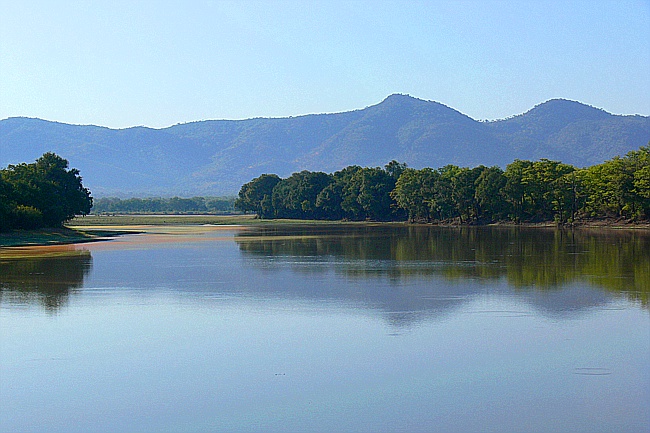
Except for very rare falls in August, rainfall is confined to the wet season, which sometimes starts as early as October and finishes as early as March. At the height of the wet season it rains on seven or eight days out of ten. Average temperatures are moderated by the height of the plateau. They vary from 15 degrees C to 27 degrees C in the cool season with morning and evening temperatures as low as 6 degrees C to 10 degrees C and occasional frost on calm nights in valleys and hollows which are sheltered from the wind. In the cool season the prevailing wind, dry south easterlies come from the southern hemisphere belt of high pressure. Invasions of cold air from the south-east bring cloudy to overcast conditions. During the hot season maximum temperatures may range from 27degrees C to 35 degrees C. Zambia’s vegetation is of the savanna type and over half the country is covered by trees, varying from the more open conditions in the drier south to tall dense woodlands in the north and north-west. These woodlands contain only hardwoods. The trees are bare for a brief period only and the spring leaves appear before the start of the rains. Grass fires spread rapidly in the dry season but new blades of grass soon push through the blackened earth. Zambia’s climate makes possible the cultivation of a wide range of crops; maize, tobacco, cotton, rice, wheat and groundnuts. All kinds of vegetables can be grown, together with citrus fruit, bananas, pineapples, mangoes, avocados and even grapes. Litchis are also a high potential export crop. Tea and coffee are also grown successfully in fact the coffee produced is of a very high quality. Sugar cane is grown both as subsistence and as a cash crop.
CONTACT AN EXPERT TO PLAN YOUR ZAMBIA & VICTORIA FALLS TOUR